No.158, Baoqun Road, Yaozhuang Town, Jiashan County, Jiaxing City, Zhejiang Province , China

Content
Equipment steel structure welding OEM services deliver customized fabrication solutions for industrial equipment frames, machinery components, and heavy-duty structural assemblies. Professional OEM welding manufacturers combine advanced welding technologies, precision engineering, and quality management systems to produce load-bearing structures meeting stringent industrial performance standards.
Equipment steel structure welding OEM represents a comprehensive manufacturing approach where specialized fabricators design, engineer, and produce custom steel structures based on client specifications. The OEM process integrates material selection, precision cutting, formation, welding assembly, inspection, and surface finishing into a controlled workflow. This ensures final products meet dimensional tolerances, strength requirements, and safety standards for demanding industrial applications.
Core Value: Professional OEM welding partners assume full responsibility for design verification, material procurement, manufacturing quality, and delivery—enabling equipment manufacturers to focus on core business operations rather than maintaining in-house fabrication capabilities.
Analyze client drawings, specifications, and load requirements to determine optimal fabrication approach.
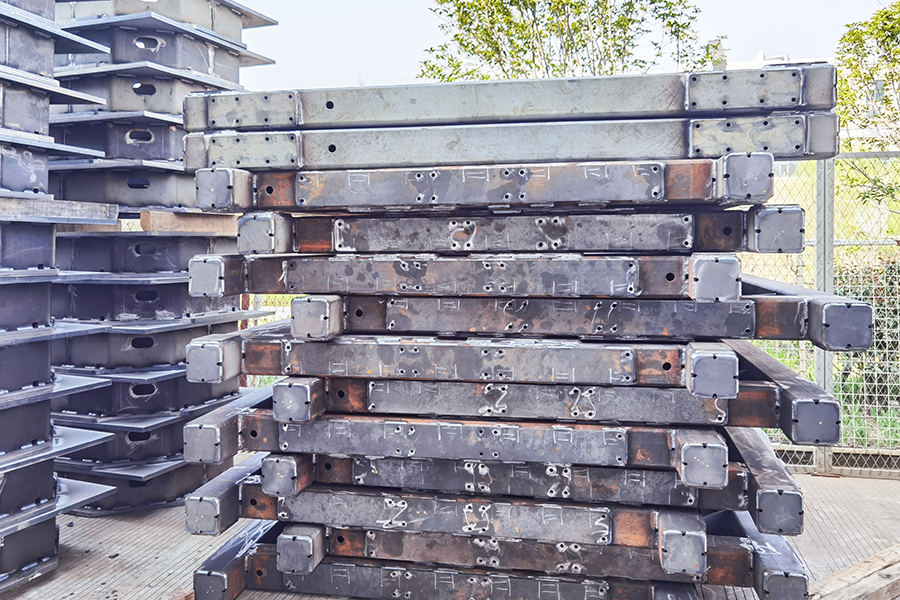
Source certified steel grades matching performance requirements with full material traceability documentation.
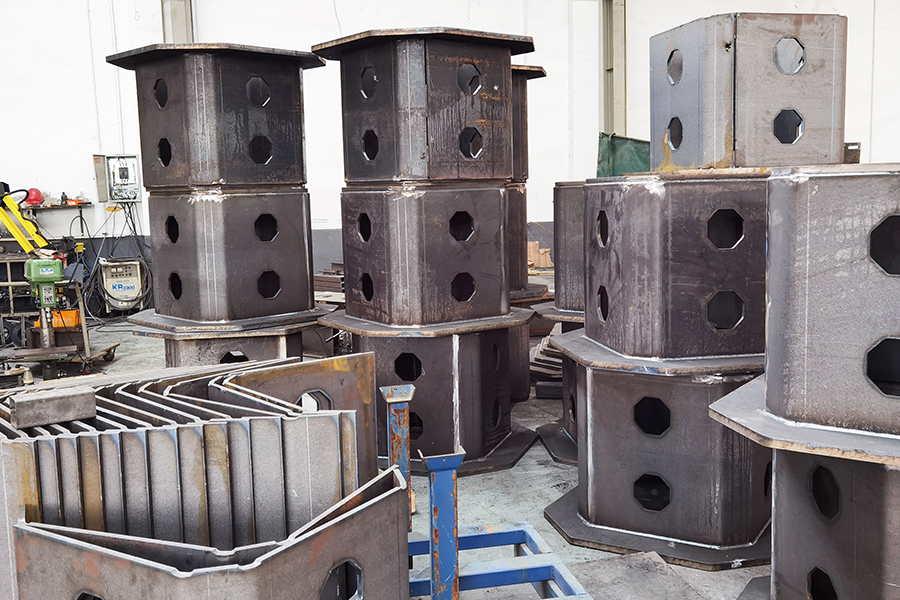
Cut materials to exact dimensions using CNC plasma or laser cutting for tight tolerances.
Bend, form, and machine components using hydraulic presses and CNC equipment.
Assemble and weld components using appropriate methods (MIG, TIG, submerged arc) based on material and design.
Conduct dimensional verification, weld testing, and non-destructive testing per industry standards.
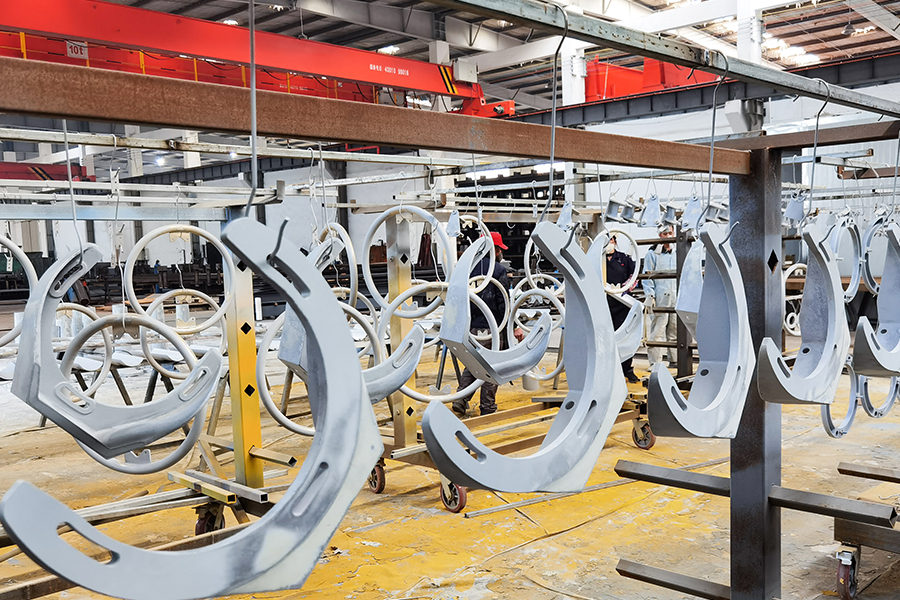
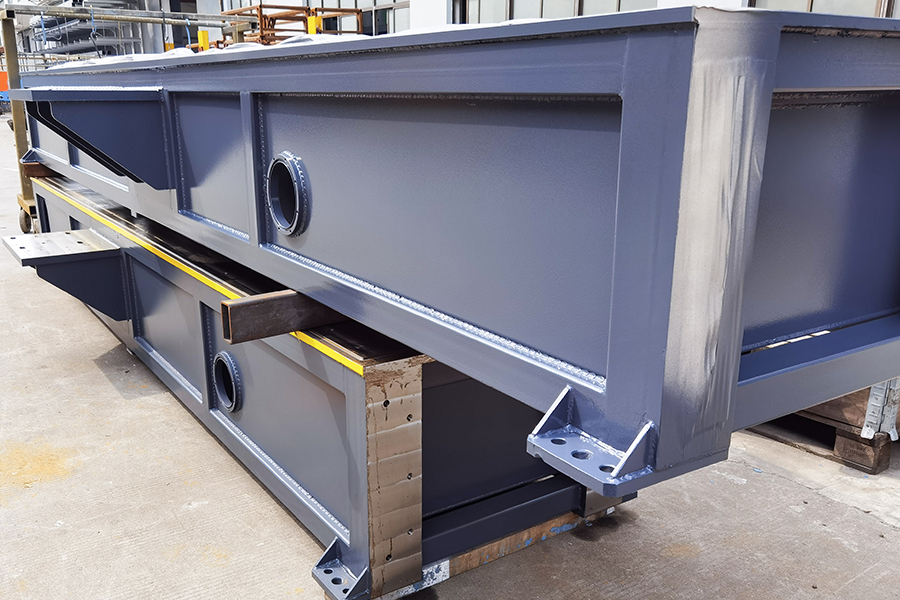
Apply finishing treatments: sandblasting, painting, galvanizing, or powder coating for protection.
Package, ship, and provide complete certification, test reports, and traceability documentation.
Equipment steel structure welding OEM partners provide design-to-production support, translating unique equipment requirements into optimized fabrication solutions without requiring in-house design staff.
Professional welding quality, certified materials, and comprehensive testing ensure structures meet load ratings, safety factors, and operational lifespans required for heavy-duty industrial equipment.
OEM partners manage capacity planning, material procurement, and scheduling to support both prototypes and high-volume production runs without capital investment from equipment manufacturers.
Outsourcing fabrication eliminates facility overhead, labor costs, and equipment investment while leveraging OEM economies of scale—typically reducing per-unit fabrication cost by 30-50%.
Integrated quality management systems, certified welders, and third-party inspections provide documentation and traceability required for regulated industries and customer certification.
OEM partners handle material sourcing, inventory management, and logistics—reducing equipment manufacturers' procurement complexity and supply chain risk.
Equipment steel structure welding OEM manufacturers produce equipment frames, pump bases, motor mounts, and machine housings supporting precision manufacturing equipment. These structures absorb operational vibration and maintain alignment during high-speed operations.
Excavators, loaders, cranes, and heavy machinery require welded structural frames meeting rigorous load-bearing and durability standards. OEM fabricators specialize in multi-ton structural assemblies with reinforced joint design and stress analysis.
Robotic welding systems, conveyor frames, automated assembly lines, and manufacturing equipment rely on precision-welded structural components with tight geometric tolerances.
Pressure vessels, boiler components, turbine supports, and energy infrastructure require specialized welding expertise and compliance with pressure equipment standards and codes.
Storage racks, conveyor systems, lifting equipment frames, and handling apparatus demand high-strength welded structures with precise dimensional control and safety-factor engineering.
Most common for general industrial steel fabrication. Provides fast deposition rates, good penetration, and suitable for structures where speed and cost-effectiveness are priorities. Ideal for mild and low-alloy steels.
Premium welding method offering superior control and precision. Used for high-strength steel, stainless steel, and applications requiring aesthetic finish or critical structural integrity.
High-deposition-rate process ideal for heavy structural steel fabrication, pressure vessels, and large assemblies. Produces high-quality welds with excellent penetration and minimal spatter.
Combines advantages of stick and MIG welding. Effective for field repairs, outdoor applications, and situations where shielding gas supply is impractical.
| Selection Criterion | What to Evaluate |
| Manufacturing Capability | Largest project size handled, annual production capacity, equipment range (cutting, pressing, welding, CNC), and facility scalability for future growth. |
| Welding Experience | Years in business, portfolio of completed projects, industry certifications (ISO 9001, ISO 3834, ASME), and references from established equipment manufacturers. |
| Technical Support | Engineering team available for design consultation, DFM (Design for Manufacturability) analysis, material recommendations, and problem-solving during development. |
| Quality Management | Documented QA procedures, certified welder qualifications (AWS, CAWI, international standards), inspection capabilities (CMM, ultrasonic testing, tensile testing), and material traceability systems. |
| Supply Chain Reliability | Material supplier relationships, inventory management practices, lead time consistency, and contingency planning for supply disruptions. |
| Pricing Structure | Transparent cost breakdown, prototype pricing vs production volume discounts, tooling cost allocation, and payment terms alignment with production schedule. |
Equipment steel structure welding OEM manufacturers source materials meeting ASTM, ASME, EN, and ISO specifications. Common steel grades include:
Professional OEM fabricators implement comprehensive testing to verify structural integrity:
Surface examination for cracks, porosity, spatter, and dimensional conformance per ISO 5817 standards.
CMM (Coordinate Measuring Machine) or caliper measurement confirming all critical dimensions meet print specifications within tolerance stack-up.
Non-destructive testing detecting internal weld defects, inclusions, and material inconsistencies without damaging structures.
Weld coupon samples tested to destruction, verifying yield strength, tensile strength, and elongation meet material specifications.
Vickers or Rockwell hardness measurement confirming material properties and weld zone quality.
Optional proof-load testing of complete structures to specified load levels, verifying safety factors and structural behavior.
Advanced OEM facilities deploy collaborative robots (cobots) and fully automated welding lines, improving consistency, reducing labor costs, and enabling 24/7 production for high-volume programs.
Real-time production monitoring, predictive maintenance, and data-driven quality control systems enable OEM partners to optimize processes and provide customers with detailed performance analytics.
Modern OEM facilities emphasize material efficiency, waste reduction, energy-efficient equipment, and recyclable coating systems—aligning with industrial decarbonization initiatives.
OEM capabilities expanding to include high-strength low-alloy (HSLA) steels, composite bonding, and hybrid structures combining steel with aluminum and carbon fiber for weight reduction.
Lead times vary based on complexity and volume. Simple structures may require 4-6 weeks from order to delivery, while complex assemblies with advanced testing can extend to 8-12 weeks. Equipment steel structure welding OEM partners should provide detailed scheduling during the quotation phase. Rush services are available at premium pricing for expedited requirements.
Verify your OEM partner maintains AWS D1.1 (structural steel), AWS D1.6 (stainless steel), or ISO 9606 (European standard) welder certifications. Additionally, the manufacturer should hold ISO 3834 (quality requirements for steel welding), ISO 9001 (quality management), and ASME certification if producing pressure equipment.
Equipment steel structure welding OEM manufacturers use jigs, fixtures, and modular assembly methods to control tolerance stack-up. Coordinate Measuring Machines (CMM) verify critical dimensions. For large structures, experienced fabricators use stress-relieving to reduce distortion from welding heat.
Professional OEM partners employ certified welders trained in defect repair—removing defective welds through grinding and re-welding to original specifications. Post-repair testing re-qualifies repaired areas. Critical defects that cannot be safely repaired result in component scrapping and re-fabrication at no cost to the customer per standard OEM contracts.
Yes. Most equipment steel structure welding OEM providers offer integrated finishing: sandblasting for surface preparation, primer application, polyurethane or epoxy paint systems, hot-dip galvanizing for corrosion protection, or powder coating for specialized applications.
Minimum order quantities vary. Many OEM partners accept single-unit or small-batch orders for prototype development or specialized equipment. Production volume discounts typically apply at quantities of 10+ units annually. Discuss MOQ requirements during partner selection to ensure alignment with your business model.
Equipment steel structure welding OEM services deliver customized fabrication solu...
READ MORE
Understanding Steel Fabrication Pricing Steel fabrication is a critical service acro...
READ MORE
The structural integrity of modern buildings depends heavily on the precision and qu...
READ MORE
Selecting an equipment steel structure welding OEM partner determines whether a mach...
READ MORE