English
 日本語
 Deutsch
 Español
No.158, Baoqun Road, Yaozhuang Town, Jiashan County, Jiaxing City, Zhejiang Province , China
News
Home / News / Industry News / Laser Welding vs Conventional Welding Processing: Which Is More Efficient for Your Production Line?

Content
In thin sheet metal fabrication, the real cost of conventional MIG or TIG welding rarely appears on the welding quote. It hides in the grinding booth, the straightening press, and the rework station. Laser welding, by contrast, arrives with a visible price tag on the machine and a promise of speed. The question buyers actually face is not which process welds faster, but which process delivers the lowest total cost per finished part.
That distinction matters because the word efficiency carries two meanings on a production floor. One is arc-on time: how many millimeters per minute the torch or beam travels. The other is throughput yield: how many parts leave the cell conforming, without secondary correction. A process that welds three times faster but requires thirty minutes of post-weld dressing per assembly is not efficient in any commercial sense.
This comparison quantifies both meanings across four dimensions: cycle time and penetration, heat input and post-processing, labor dependency, and consumable and energy cost. The goal is a defensible cost-per-part model you can apply to your own order mix, whether you are evaluating an in-house upgrade or comparing quotes from outside processors.
Before comparing costs, define the measurement basis. Three physical metrics dominate the economics of any welding cell: travel speed, penetration per pass, and heat input per unit length. Each behaves differently between an electric arc and a focused laser beam.
For sheet thickness below 4 mm, fiber laser welding commonly runs at three to five times the linear speed of TIG on comparable lap or butt joints. The advantage comes from power density: a focused beam concentrates energy into a spot small enough to keyhole through thin material in a single pass, without the arc wandering that forces a TIG operator to manage heat across a wider area.
Penetration depth per pass also diverges. A conventional arc process on 3 mm stainless typically needs edge preparation and may require two passes for full fusion on a butt joint. A laser in the 1 to 3 kW class can achieve single-pass full penetration on the same thickness with a properly fixtured joint. Fewer passes means less inter-pass cleaning, less cumulative heat, and shorter cycle time.
| Metric | Conventional MIG / TIG | Fiber Laser |
|---|---|---|
| Typical speed, 2 mm stainless lap | 300 to 600 mm/min | 1500 to 3000 mm/min |
| Passes for 3 mm butt joint | 2 to 3 | 1 |
| Heat input per unit length | High, wide spread | Low, concentrated |
| Setup and fixture complexity | Moderate | High, gap tolerance tight |
Heat input is where the hidden labor lives. Conventional welding spreads thermal energy across a broad zone, and on thin sheet that produces angular distortion, oil-canning, and discoloration. Each of those defects converts into grinding time, straightening time, or pickling and passivation time. In many fabrication shops, post-weld dressing on thin stainless consumes 30 to 50 percent of total labor hours per assembly.
Laser welding narrows the heat affected zone dramatically. On thin sheet, distortion is often small enough that no mechanical straightening is required, and the weld bead is flush enough to eliminate or greatly reduce grinding. The efficiency gain is therefore not just faster arc-on time; it is the removal of an entire secondary operation from the routing.
Practical benchmark: Shops that move thin stainless assemblies from TIG to laser routinely report grinding hours falling by 60 to 80 percent, with the largest savings on visible cosmetic surfaces where weld dressing was previously mandatory.
A welding quote that lists only wire, gas, and labor rate understates the true cost per part. The full model must include skill premium, rework, consumable volume, and energy. Conventional processes carry structural disadvantages in three of those four categories.
MIG and TIG quality depends heavily on operator technique. Torch angle, travel speed, and arc length all influence penetration and bead appearance, and a skilled welder takes months to develop consistent output on thin material. That skill carries a wage premium and creates scheduling fragility: when the senior welder is absent, throughput and quality both drop.
Laser welding is substantially deskilled at the point of operation. With a fixtured workpiece and a programmed path, a new operator can produce consistent welds after a short training period, and one operator can tend multiple cells. The labor cost per part therefore falls on two axes: lower hourly rate and higher units per labor hour.
| Cost Element | Conventional | Laser |
|---|---|---|
| Operator skill requirement | High | Low to moderate |
| Training period | Months | Days to weeks |
| Operators per cell | 1 per torch | 1 per multiple cells |
| Labor cost per part | High | Low |
| Quality consistency | Operator dependent | Process dependent |
Conventional welding consumes filler wire, shielding gas, contact tips, nozzles, and liners continuously. On high-volume thin sheet work, gas and wire alone can represent a meaningful share of variable cost. Laser welding in autogenous mode consumes no filler wire, and even when wire is used for gap bridging, the volume is far lower. Shielding gas consumption is also reduced because the molten zone is small.
On energy, modern fiber laser sources convert electrical input to optical output at high efficiency, and the beam is applied only where it is needed. Comparative studies of thin sheet welding report overall energy consumption reductions in the range of 70 to 90 percent versus arc processes for equivalent joint length, driven by shorter arc-on time and the elimination of post-weld thermal correction.
Filler wire: eliminated or sharply reduced with laser autogenous welding
Shielding gas: lower flow and shorter exposure time per joint
Contact tips and nozzles: not applicable to laser optics
Electricity per meter of weld: substantially lower with laser on thin sheet
Grinding consumables: reduced in proportion to dressing hours removed
An honest comparison must state the limits of the faster process. Laser welding is not universally superior, and recommending it for every joint profile damages credibility and produces unhappy buyers.
Laser welding delivers its strongest economics on material under roughly 4 to 6 mm, in repeatable geometries, at volumes high enough to amortize fixture and programming time. Typical fits include stainless kitchen equipment, electrical enclosures and cabinets, battery tray components, signage and lettering, and thin-wall tubular assemblies.
The process also integrates well with automation. A fiber laser source can be mounted on a robotic arm, a gantry, or a handheld unit. For low-volume work, a handheld laser unit offers flexibility without full fixture investment; for high-volume work, a robotic cell drives labor cost per part toward the cost of loading and unloading alone.
Above roughly 10 mm, single-pass laser welding requires high power and tight joint preparation, and the economics shift toward conventional multi-pass arc welding or hybrid processes. Field repair and outdoor structural work also favor conventional equipment, which tolerates wind, surface contamination, and imperfect fit-up far better than a focused beam.
Very small batch shops with limited capital and no automation roadmap may also find that conventional welding remains the rational choice, particularly where cosmetic requirements are low and distortion can be corrected cheaply.
| Application | Recommended Process | Reason |
|---|---|---|
| 2 mm stainless enclosure | Laser | Speed, low distortion, minimal dressing |
| Battery tray, thin aluminum | Laser | Narrow heat zone, automated repeatability |
| 12 mm structural bracket | Conventional | Penetration per pass, fit-up tolerance |
| Outdoor site repair | Conventional | Portability, contamination tolerance |
| Cosmetic signage, low volume | Handheld laser | Flexibility without fixturing |
Return on investment for a process upgrade is best expressed as a payback period in months. The model compares the annual savings from the laser process against the net capital difference between the two options.
Payback period in months equals the net capital difference divided by monthly savings.
Monthly savings combine four streams: reduced welding labor hours, reduced grinding and straightening hours, reduced consumable spend, and reduced scrap and rework.
Consider a representative shop welding thin stainless assemblies. Before the upgrade, each part requires 18 minutes of welding and 22 minutes of grinding and straightening, at a blended labor cost of 35 per hour. After moving to a fixtured laser cell, welding drops to 6 minutes and post-processing to 5 minutes. The labor saving is roughly 29 minutes per part, or about 17 per part at the blended rate. Add consumable savings and scrap reduction, and the per-part saving commonly lands between 15 and 25 on assemblies of this type.
At 400 parts per month, that equates to monthly savings of 6,000 to 10,000. Against a net capital difference in the range of 40,000 to 80,000 after accounting for retained conventional equipment, payback typically falls between 6 and 14 months. Shops running two shifts compress that further.
Two inputs determine whether the model holds for your product: annual volume and the share of labor currently spent on post-weld correction. If grinding is already minimal because your joints are thick and non-cosmetic, the savings case weakens. If dressing dominates your routing, the case strengthens quickly.
Equipment price varies widely with power class, automation level, and whether the source is paired with a robot or a handheld head. Rather than publish a single figure that misleads, the useful step is to model your own part. A processing partner can run a sample batch and return measured cycle times, which converts the payback estimate from assumption to data.
The build-or-buy decision comes before the process decision. Some buyers need a machine; others need finished parts. Clarifying which you are determines what to evaluate next.
If you are sourcing finished assemblies, the relevant question is whether your supplier can select the process per part rather than forcing one technology across the order. A capable processor maintains both laser and conventional capacity, routes thin cosmetic work to laser, routes thick structural work to arc, and quotes each line accordingly. That mixed model usually produces a lower total price than a single-technology shop, because neither process is applied outside its economic range.
If you are buying equipment, match the source to your thickness range and volume. Handheld laser units suit low-volume, varied work and field-adjacent tasks. Robotic or gantry cells suit high-volume, repeatable parts where fixture investment amortizes. Power class should follow the thickest single-pass joint you intend to weld, not the average thickness of your catalog.
Can you show measured cycle time and dressing time on a sample of my part?
Do you route by part or apply one process to everything?
What gap and fit-up tolerance does your laser process require?
How do you handle distortion correction when it is needed?
What inspection method confirms penetration on thin sheet joints?
Two paths, one form: Tell us whether you need welding service for finished assemblies or guidance on equipment selection. Send your drawing or sample photo and receive a process recommendation with pricing within 24 hours.
Get a quote for your welding processing project
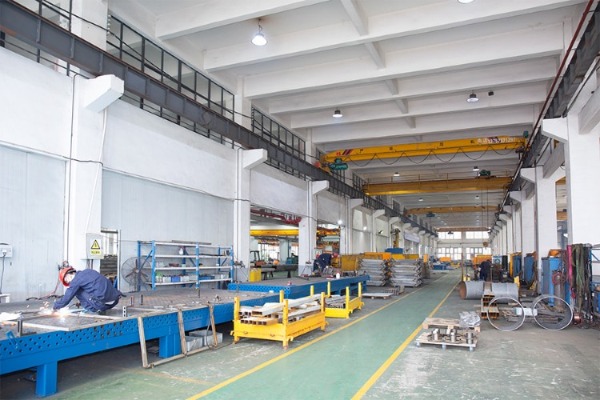
On thin sheet with cosmetic requirements, laser welding usually produces a lower total cost per part despite higher equipment cost, because the reduction in grinding, straightening, and skilled labor outweighs the capital difference. On very low volumes or non-cosmetic joints, conventional TIG can remain cheaper.
As a practical guide, fiber laser sources in common industrial power classes achieve full penetration in a single pass on stainless and carbon steel up to roughly 4 to 6 mm, depending on joint type and power. Beyond that, multi-pass laser, hybrid laser-arc, or conventional welding becomes more economical.
On thin sheet with well-fitted joints, laser welds are often flush enough to require no grinding on non-visible surfaces and only light dressing on visible ones. Shops typically report 60 to 80 percent reduction in dressing hours after converting thin cosmetic assemblies from TIG.
Not always. Autogenous laser welding fuses the base material without filler, which is common on thin sheet with tight fit-up. Filler wire is added when joint gaps or alloy requirements demand it, and consumption is far lower than in MIG or TIG.
For a shop running several hundred thin assemblies per month with significant dressing hours, payback commonly falls between 6 and 14 months. The dominant variables are annual volume and the share of current labor spent on post-weld correction.
Yes, and mixed-capability suppliers are often the better choice for buyers with a varied order book. Routing thin cosmetic parts to laser and thick structural parts to arc avoids applying either process outside its economic range.
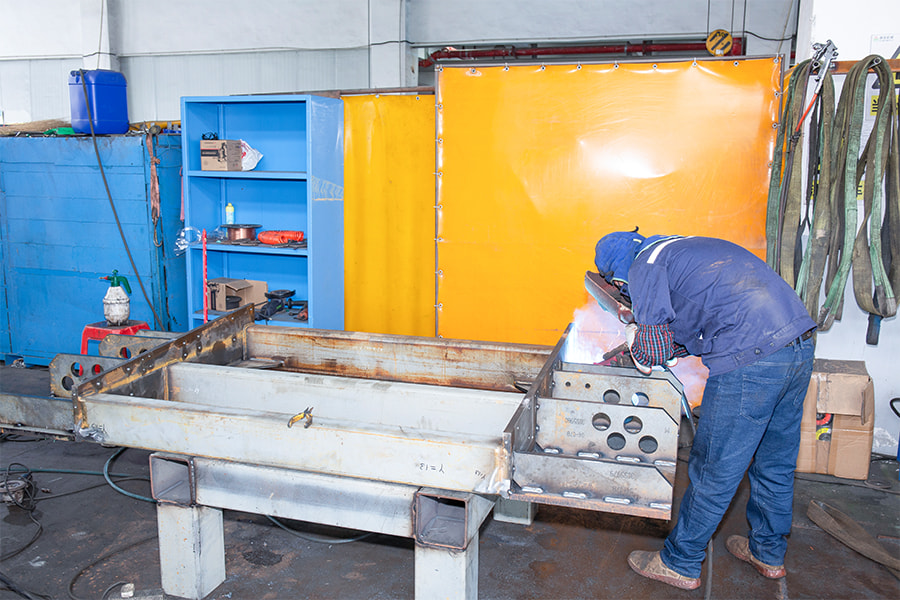
Why Efficiency in welding processing Is Misunderstood In thin sheet metal fabricatio...
READ MORE
Extreme environments do not forgive guesswork. A weld that passes visual inspection ...
READ MORE
Picture a batch of fabricated brackets arriving at an assembly line on a Monday morn...
READ MORE
When construction teams plan a rack project, one of the first decisions is where th...
READ MORE
No.158, Baoqun Road, Yaozhuang Town, Jiashan County, Jiaxing City, Zhejiang Province , China
0086 13857303563
+86-573-84893330 / +86-573-84518277
product