English
 日本語
日本語
 Deutsch
 Español
No.158, Baoqun Road, Yaozhuang Town, Jiashan County, Jiaxing City, Zhejiang Province , China

Content
Welding is a fundamental process in the manufacturing and construction industries, particularly in the fabrication of equipment steel structures. Welding involves joining two or more materials, typically metals or thermoplastics, by causing them to melt and fuse together. The welding process not only ensures the structural integrity of equipment but also enhances its functionality and durability. Different welding techniques are employed based on the material being welded, the environment, and the desired strength of the finished product.
Arc Welding (SMAW)
Process Overview: Shielded Metal Arc Welding (SMAW), also known as stick welding, uses a consumable electrode coated with a flux to create the weld. An electric current is passed through the electrode to form an arc, which melts the electrode and the base material to form a joint.
Applications: Arc welding is widely used in equipment steel structure manufacturing due to its versatility and ability to weld a variety of metals, including carbon steel, stainless steel, and alloy steels. It is often used in heavy-duty applications such as bridges, buildings, and machinery.
Tungsten Inert Gas (TIG) Welding
Process Overview: Tungsten Inert Gas (TIG) welding, or Gas Tungsten Arc Welding (GTAW), uses a non-consumable tungsten electrode to produce the weld. The process is shielded by an inert gas, typically argon or helium, to prevent oxidation and contamination of the weld.
Applications: TIG welding is known for producing high-quality, clean, and precise welds, making it ideal for welding thin materials or where aesthetics and strength are essential. It is commonly used in industries such as aerospace, automotive, and precision equipment manufacturing.
Metal Inert Gas (MIG) Welding
Process Overview: MIG welding (also called Gas Metal Arc Welding or GMAW) uses a continuously fed consumable electrode and an inert shielding gas to protect the weld area from contamination. It is faster than TIG welding and is often preferred for welding thicker sections of steel.
Applications: MIG welding is commonly used in the production of equipment steel structures, such as frames, support beams, and piping systems. Its efficiency and ease of use make it a preferred choice for high-volume production environments, such as shipbuilding and structural steel fabrication.
Gas Welding (Oxy-Acetylene Welding)
Process Overview: Gas welding uses a flame produced by burning a mixture of oxygen and acetylene to melt the base material and create a joint. It is one of the oldest welding methods and can be used to join metals like steel, aluminum, and copper.
Applications: Gas welding is commonly used in maintenance and repair work due to its portability and versatility. It is also employed for light to medium-duty welding tasks, such as welding pipes and small equipment parts.
Laser Welding
Process Overview: Laser welding uses a high-powered laser beam to melt the material at the welding point. The intense heat generated by the laser creates a narrow, deep weld pool with minimal heat-affected zones.
Applications: Laser welding is employed in high-precision applications where low heat input and minimal distortion are required. It is often used in the automotive, electronics, and medical device industries for components that require tight tolerances and high-quality welds.
Submerged Arc Welding (SAW)
Process Overview: Submerged Arc Welding (SAW) is an automatic or semi-automatic welding process where the arc is submerged under a layer of granular flux. This process allows for high-quality, deep welds with minimal spatter and contamination.
Applications: SAW is typically used in the welding of thick sections of equipment steel structures, such as large tanks, pressure vessels, and heavy-duty industrial machinery. Its ability to produce deep welds with high deposition rates makes it ideal for thick metal applications.
Electroslag Welding (ESW)
Process Overview: Electroslag welding is a highly productive welding process used to weld thick steel sections. In this method, an electric arc is maintained between the electrode and the molten slag, which acts as a heat source for the weld.
Applications: ESW is primarily used for welding large, heavy equipment steel structures, including components in the construction and shipbuilding industries. It is well-suited for welding thick, vertical welds in heavy equipment.
When selecting a welding method for manufacturing equipment steel structures, several factors must be considered:
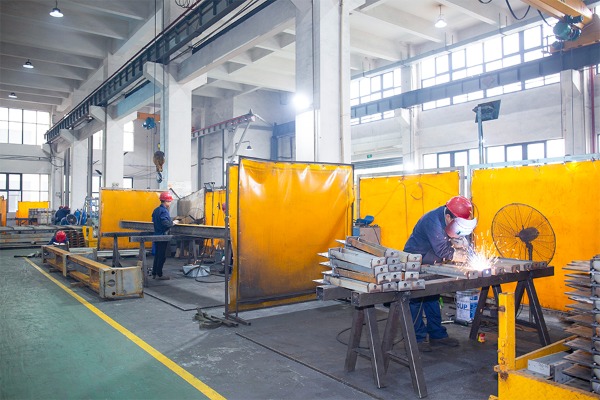
Welding is essential for creating strong, reliable, and durable equipment steel structures. At Jiaxing Dingshi Machinery Manufacturing Co., Ltd., welding is one of the core processes in the production of equipment steel structures. The company employs advanced welding technology and equipment to ensure that each welded joint meets the highest strength and quality standards. Their welders are highly trained and certified, skilled in various welding techniques, including arc welding (SMAW), TIG welding, MIG welding, and laser welding, to meet the specific requirements of each project.
The company strictly follows international standards and customers’ technical specifications, ensuring that every weld is defect-free and highly reliable. By using precise process control and continuous quality monitoring, Jiaxing Dingshi ensures that their equipment steel structures are strong and durable, providing clients with dependable products for industrial applications.
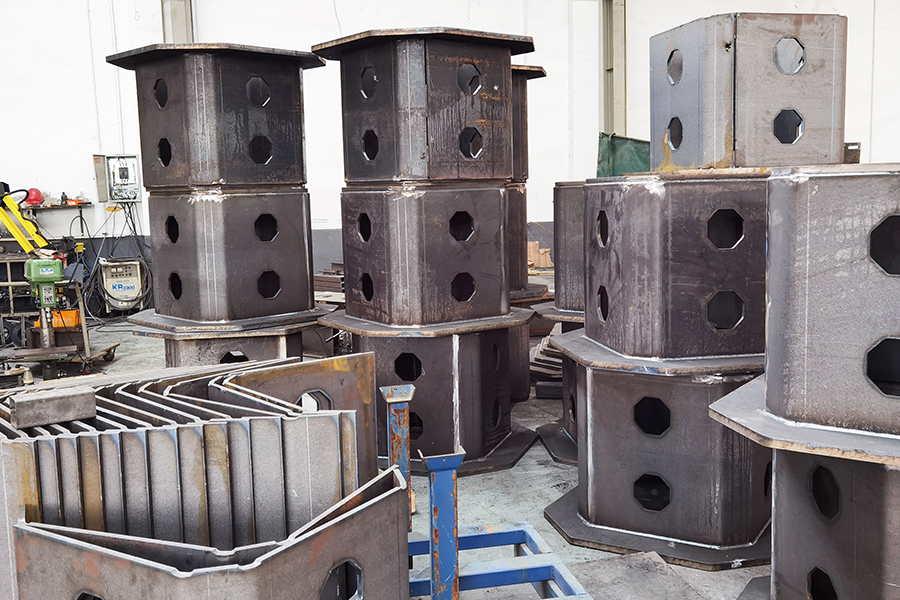
Welding plays a crucial role in the manufacturing of complex equipment steel structures, such as those used in industrial machinery, construction, and transportation systems. Jiaxing Dingshi Machinery Manufacturing Co., Ltd. specializes in providing customized welding solutions to meet the unique needs of each project. Their welding processes, combined with their expertise in the fabrication of industrial and manufacturing equipment structures, result in high-quality, precision-engineered products.
One of the most important aspects of welding in equipment steel structure manufacturing is quality control. At Jiaxing Dingshi, the welding process is closely monitored to ensure that the final product meets or exceeds customer expectations. By employing strict quality assurance measures and process controls, the company ensures that each welded component is free from defects, maintaining the structural integrity of the equipment.
| Practice | Description |
|---|---|
| Welder Training and Certification | All welders undergo rigorous training and certification to master various welding techniques. |
| Weld Inspection and Testing | Continuous testing and inspection are carried out to detect any defects, ensuring high-quality welds. |
| Process Control | Precise control of welding parameters ensures that the correct amount of heat and pressure is applied during the welding process. |
1. What are the most commonly used welding techniques for equipment steel structure manufacturing?
The most commonly used welding techniques include SMAW (arc welding), TIG welding, MIG welding, and laser welding. Each method is chosen based on the material, thickness, and quality requirements of the structure.
2. How does welding affect the durability of equipment steel structures?
Welding is crucial for the durability of equipment steel structures as it ensures that joints are strong and able to withstand stresses and environmental factors. Proper welding processes lead to reliable and long-lasting products.
3. What factors influence the choice of welding method in equipment steel structure fabrication?
Factors such as material type, thickness, production speed, and weld quality requirements influence the choice of welding method. Each technique offers distinct advantages depending on the application.
4. How does Jiaxing Dingshi ensure the quality of their welded steel structures?
Jiaxing Dingshi ensures the quality of their welded steel structures by using advanced welding equipment, providing welder certification, and implementing strict quality control and process monitoring throughout production.
5. Can welding be used for all types of metals?
Welding can be used on most metals, including carbon steel, stainless steel, aluminum, and alloy steels. The specific welding method used depends on the material’s properties and the requirements of the project.
Why Equipment Structural Framework Welding Demands More Than Just a Welder Not all w...
READ MORE
How Much Does Steel Structure Frame Welding Cost? When sourcing steel structure fram...
READ MORE
Why Professional Rack Welding Matters More Than You Think The structural integrity o...
READ MORE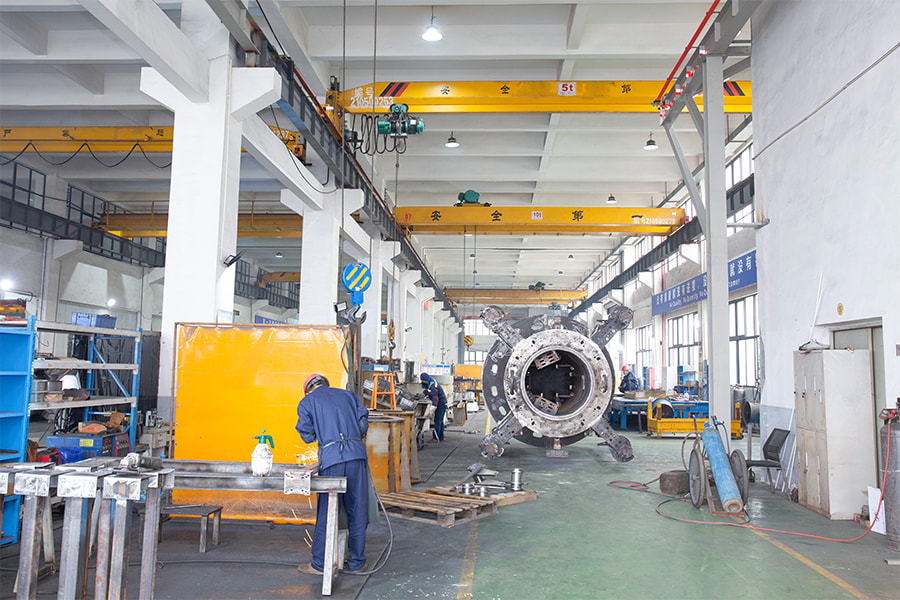
Large-scale construction projects demand materials and processes that guarantee reli...
READ MORE
No.158, Baoqun Road, Yaozhuang Town, Jiashan County, Jiaxing City, Zhejiang Province , China
0086 13857303563
+86-573-84893330 / +86-573-84518277
product