No.158, Baoqun Road, Yaozhuang Town, Jiashan County, Jiaxing City, Zhejiang Province , China

Content
Each component in a glass production line serves a distinct and critical function. From the melting furnace that transforms raw materials into molten glass at temperatures exceeding 1,600°C, to the coating section that enhances surface properties, every part must operate with exceptional precision and reliability. Modern float glass production lines achieve daily outputs of 600 to 1,200 tons, with forming section temperature control accuracy within ±1°C. The structural integrity of these systems directly determines product quality, energy efficiency, and operational uptime. Understanding how each component functions is not merely an academic exercise—it is essential for optimizing production, reducing maintenance costs, and ensuring consistent output in a highly competitive industry.
A complete glass production line is a complex assembly of interconnected systems, each designed to perform a specific stage of the manufacturing process. The five primary functional sections—melting, forming, annealing, coating, and auxiliary support—work in precise coordination. The overall structure of glass production machinery is engineered to withstand extreme thermal gradients, mechanical loads, and continuous operation cycles that often exceed 8,000 hours per year.
The following table summarizes the core components and their primary functions across the production line:
| Section | Key Components | Primary Function |
| Melting | Furnace, batch charger, combustion system | Convert raw materials into homogeneous molten glass |
| Forming | Tin bath, rolling machine, edge pullers | Shape molten glass into flat sheets or other profiles |
| Annealing | Annealing lehr, temperature control zones | Relieve internal stresses through controlled cooling |
| Coating | Coating applicators, curing ovens | Apply functional or decorative surface layers |
| Auxiliary | Structural frames, drives, cooling systems | Provide support, motion, and environmental control |
The melting section is where raw batch materials—silica sand, soda ash, limestone, and cullet—are transformed into a homogeneous molten glass at temperatures ranging from 1,400°C to 1,600°C. This process requires precise control over thermal energy input, material feed rates, and combustion efficiency.
The melting furnace is typically a regenerative or recuperative design, constructed from high-grade refractory materials that can withstand extreme thermal cycling. The furnace is divided into three functional zones: the melting zone, where raw materials are liquefied; the refining zone, where bubbles and inclusions are removed; and the conditioning zone, where the glass is prepared for forming. Modern furnaces achieve thermal efficiencies of 65% to 75%, with specific energy consumption ranging from 3.5 to 5.0 GJ per ton of glass produced.
The batch charging system is responsible for delivering raw materials into the furnace at a controlled rate. Precision in this component is critical: feed rate variations of just ±0.5% can significantly affect glass quality and furnace stability. Charging systems typically use screw feeders, vibratory conveyors, or pusher-type mechanisms, all designed to create a uniform blanket of batch material on the molten glass surface.
Combustion systems in glass furnaces use natural gas or heavy fuel oil, with oxygen enrichment to enhance flame temperature and reduce emissions. Regenerative burners alternate between firing and exhaust cycles, recovering waste heat and preheating combustion air to temperatures exceeding 1,000°C. This heat recovery mechanism improves thermal efficiency by 20% to 30% compared to non-regenerative designs.
The forming section is where molten glass is shaped into its final flat or patterned form. This stage demands the highest level of precision, as the glass transitions from a viscous liquid to a solid ribbon. Temperature control, speed regulation, and mechanical accuracy are paramount.
In the float glass process, molten glass at approximately 1,100°C flows onto a bath of molten tin. The glass spreads and self-levels under gravity, forming a perfectly flat ribbon. The tin bath is housed in a sealed enclosure with a controlled atmosphere of nitrogen and hydrogen to prevent oxidation. Key parameters include bath temperature uniformity within ±2°C and glass ribbon thickness controlled to ±0.05 mm for standard float glass products.
For patterned or wired glass, rolling machines are used. These consist of water-cooled steel rolls with engraved surfaces that imprint patterns onto the glass surface. Roll pressure and speed must be precisely controlled to achieve consistent pattern depth and glass thickness. Typical rolling speeds range from 2 to 10 m/min, with roll gap adjustments accurate to 0.01 mm.
Edge pullers, or top rollers, are used to control the width and thickness of the glass ribbon as it exits the tin bath. These water-cooled rollers engage the glass edges and apply outward tension. The pulling speed and angle are critical; even a 0.5° misalignment can cause edge stress or ribbon distortion. Modern edge control systems use servo-driven actuators with position feedback accuracy of ±0.1 mm.
After forming, the glass ribbon enters the annealing lehr, where it undergoes a carefully controlled cooling process. This step is essential to relieve internal stresses that would otherwise cause spontaneous breakage or distortion during cutting and handling. The annealing process reduces internal stress levels from several hundred psi to below 10 psi, ensuring dimensional stability and mechanical strength.
The annealing lehr is a long, insulated tunnel through which the glass ribbon travels on a bed of rollers. The lehr is divided into multiple temperature zones, each independently controlled. The cooling profile typically follows a three-stage pattern: rapid cooling from the forming temperature to the annealing point (approximately 550°C), slow cooling through the annealing range (550°C to 450°C), and accelerated cooling to ambient temperature.
Temperature uniformity across the width of the glass ribbon is critical. Variations of more than ±3°C across the ribbon can result in differential stress and permanent distortion. Modern lehrs use thermocouples placed at 50 mm intervals across the width, with PID controllers adjusting heater or cooling air flows to maintain uniformity. The lehr's length typically ranges from 80 to 200 meters, depending on line speed and glass thickness.
The coating section applies functional or decorative layers to the glass surface, enhancing properties such as solar control, low-emissivity (Low-E), self-cleaning, or aesthetic appearance. Coating processes are typically performed online, immediately after annealing, or offline in separate coating lines.
Online coating is performed using chemical vapor deposition (CVD) or pyrolytic spray methods. In CVD, precursor gases are introduced onto the hot glass surface (at approximately 600°C), where they react to form a thin, durable coating. Coating thickness is controlled to ±5 nm for optical coatings, requiring precise gas flow control and temperature uniformity. Online coating lines typically produce coated glass at speeds of 5 to 20 m/min.
Offline coating uses magnetron sputtering in a high-vacuum chamber. This process allows for multi-layer coatings with precise optical properties. Sputtering systems consist of vacuum chambers, targets (metallic or ceramic), and power supplies that generate plasma. Layer thickness control is ±0.1 nm, and coating uniformity across a 3.2 m wide substrate is maintained within ±2%.
After coating application, the glass may undergo curing or annealing to ensure adhesion and durability. Curing temperatures typically range from 150°C to 300°C, with residence times of 30 seconds to 5 minutes. The curing system must provide uniform heating to avoid thermal shock or coating defects.
Beneath the functional components lies a robust structural framework that supports the entire production line. This includes steel frames, conveyor systems, cooling circuits, and control panels. The structural integrity of these auxiliary systems is often overlooked but is critical for long-term reliability.
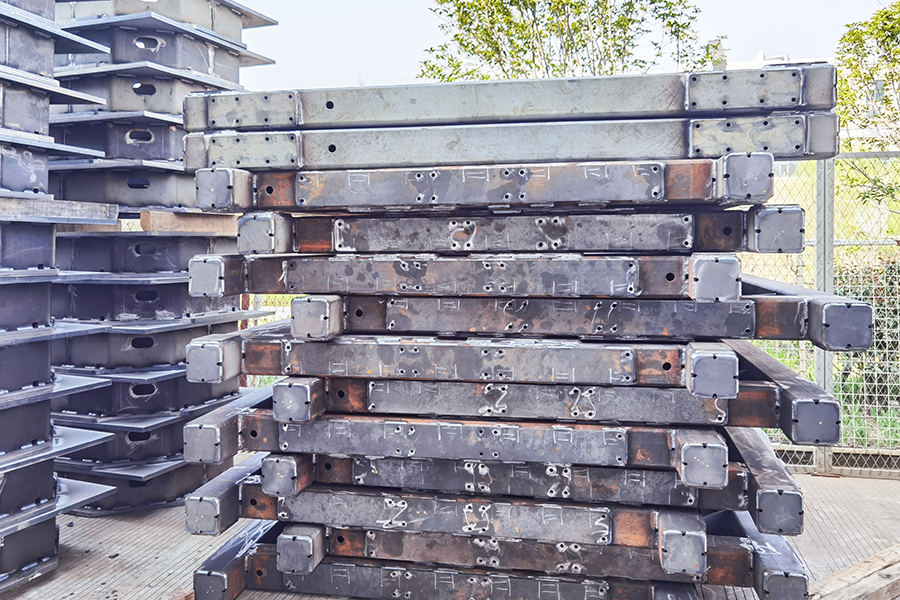
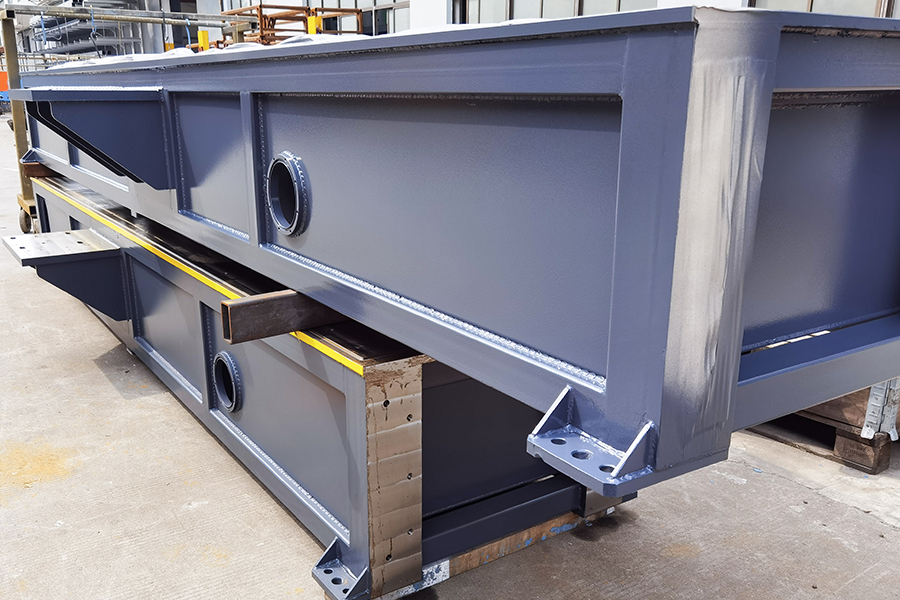
The main structural frames are constructed from heavy-duty steel sections, designed to accommodate thermal expansion. Expansion joints are placed at intervals of 15 to 25 meters to allow for longitudinal thermal growth of up to 200 mm over the length of the line. Alignment tolerances for structural members are typically ±2 mm over a 100-meter span.
Roller conveyors transport the glass ribbon through the annealing lehr and coating sections. Each roller is driven by a synchronous motor or gearbox, with speed synchronization maintained to ±0.1% across all rollers. Roller surface temperatures can reach 600°C in the hot end, requiring water-cooled shafts and specialized bearing materials.
Cooling systems are essential for protecting structural components from thermal damage. Water-cooled jackets, air blowers, and heat exchangers are used to maintain component temperatures within safe operating ranges. The cooling water supply is typically maintained at 25°C to 35°C, with flow rates of 50 to 200 m³/h depending on line size.
The performance of glass production machinery hinges on the precision and durability of its individual components. High-temperature environments, continuous operation, and mechanical loads demand materials and manufacturing processes that ensure long service life with minimal maintenance.
Components exposed to high temperatures are manufactured from heat-resistant alloys, such as nickel-chromium or cobalt-based superalloys, which maintain mechanical properties at temperatures up to 1,100°C. Refractory bricks used in furnace linings have service temperatures exceeding 1,700°C and thermal conductivity below 1.5 W/(m·K) to minimize heat loss.
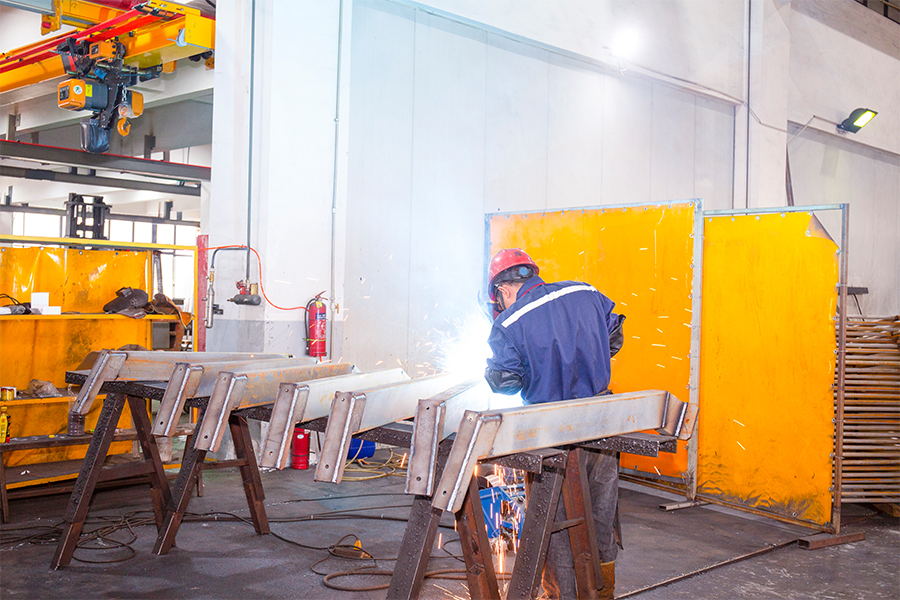
Precision machining is essential for components such as rollers, shafts, and bearing housings. Surface finish requirements are typically Ra 0.8 µm or better, with dimensional tolerances of ±0.02 mm for critical interfaces. Welding processes must be carefully controlled to minimize distortion and ensure joint integrity, with preheating and post-weld heat treatment applied as needed.
Many structural components are subject to abrasion from glass contact or environmental corrosion. Wear-resistant coatings, such as tungsten carbide or chromium oxide, are applied to roller surfaces and guide rails. These coatings extend component life by 2 to 5 times compared to uncoated surfaces, with hardness values exceeding 1,000 HV.
The reliability of glass production machinery directly impacts production efficiency, product quality, and operating costs. A well-designed maintenance program, combined with high-quality structural components, can reduce unplanned downtime by up to 40% and extend equipment life by 5 to 8 years.
Modern glass lines employ condition monitoring systems that track vibration, temperature, and load data from critical components. Vibration analysis can detect bearing wear or imbalance at an early stage, allowing for scheduled maintenance before failure occurs. Temperature monitoring of furnace walls and roller bearings provides early warning of refractory degradation or lubrication issues.
Proper lubrication of bearings, gears, and drives is essential for long-term reliability. High-temperature greases and synthetic oils are used for components operating above 200°C. Cooling systems must be regularly inspected for scale buildup, flow restrictions, and corrosion. Maintaining cooling water quality with conductivity below 500 µS/cm and pH between 7.0 and 8.5 is critical for preventing corrosion in cooling jackets.
Structural components such as rollers, bearings, and furnace parts have finite service lives. Typical roller replacement intervals range from 2 to 5 years, while furnace refractory relining is scheduled every 5 to 8 years. Planned overhaul schedules should be based on actual wear data and manufacturer recommendations to minimize production disruption.
While all components are essential, the melting furnace is arguably the most critical, as it determines the quality and consistency of the molten glass. A furnace failure can shut down the entire line for weeks, resulting in significant production losses.
Structural components—such as rollers, frames, and supports—directly influence dimensional stability and alignment. Even 0.1 mm of roller misalignment can cause thickness variations or stress marks in the glass ribbon. High-quality structural parts ensure consistent product quality.
Lifespans vary widely: furnace refractories last 5 to 8 years, rollers 2 to 5 years, and structural steel frames can last 20+ years with proper maintenance. Heat-exposed components have shorter lifespans due to thermal fatigue and oxidation.
Using precision-engineered structural components, implementing predictive maintenance, and training operators on proper handling can reduce maintenance costs by 20% to 35%. Investing in durable materials and coatings also extends replacement intervals.
Key considerations include thermal expansion management, material selection for operating temperatures, load-bearing capacity, and ease of maintenance. Components must be designed for accessibility and replaceability without major line disassembly.
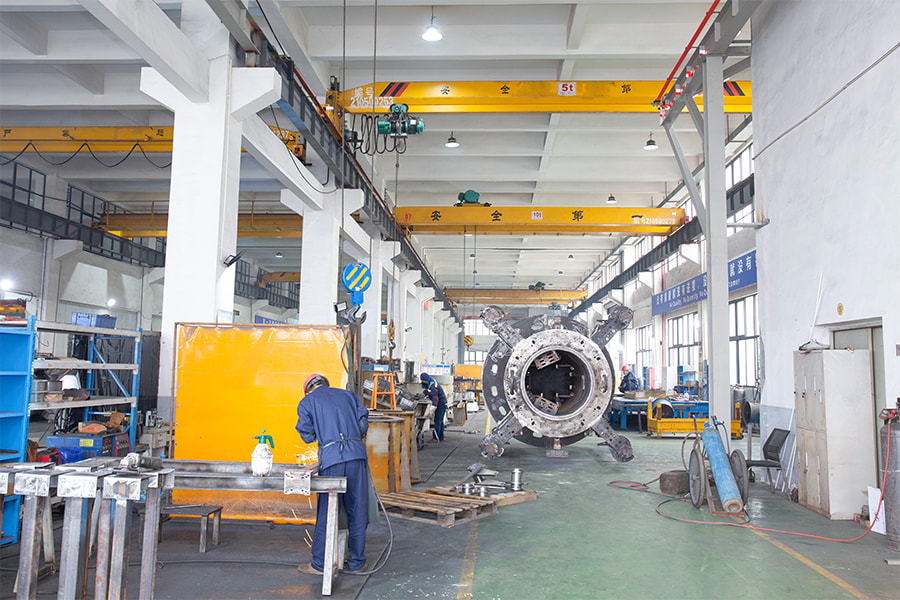
The performance and longevity of glass production lines depend on the quality of every structural component. At Jiaxing Dingshi Machinery Manufacturing Co., Ltd., we focus on providing key structural components for glass production lines, covering all aspects of melting, forming, annealing, and coating. With rich experience in cooperation with German enterprises, we ensure the high precision and durability of each structural part. Our technical team has extensive industry experience and is capable of customized design and manufacturing according to customers' specific needs. We use advanced processing and welding technology to ensure the stability and reliability of our products in high-temperature and high-pressure environments. Our glass production machinery structures not only increase production efficiency but also significantly reduce maintenance costs and downtime.
Each component in a glass production line serves a distinct and critical function. F...
READ MORE
Conclusion: Welding Processing delivers superior repeatability, throughput, and lon...
READ MORE
Conclusion: Proven Techniques for Superior Steel Frame Welding The most effective s...
READ MORE
In modern industrial manufacturing and structural engineering, the integrity of a wel...
READ MORE