English
 日本語
日本語
 Deutsch
 Español
No.158, Baoqun Road, Yaozhuang Town, Jiashan County, Jiaxing City, Zhejiang Province , China
News
Home / News / Industry News / Why Choose Professional Welding Processing for Metal Structural Components?

Content
In modern industrial construction and heavy engineering, the integrity of metal structural components is non-negotiable. From high-rise building frames to bridge trusses and industrial plant supports, these elements form the backbone of critical infrastructure. The process that joins them—metal structural parts welding processing—directly determines the safety, longevity, and performance of the entire system. While some might consider in-house or general-purpose welding, there are compelling reasons to rely on specialized, professional welding processing for these demanding applications.
Unlike light-gauge metalwork or decorative fabrication, structural components carry substantial static and dynamic loads. They operate under fatigue conditions, environmental exposure, and sometimes extreme temperatures. A failure in a single welded joint can lead to catastrophic structural collapse. Therefore, metal structural parts welding processing is not merely about fusing metals; it involves controlled heat input, proper joint design, metallurgical compatibility, and rigorous inspection protocols.
Professional welding processors understand these complexities. They follow established codes such as AWS D1.1, ISO 3834, or EN 1090, which govern everything from pre-qualified welding procedures to post-weld heat treatment. This codified knowledge separates professional operations from general metalworking shops.
One of the most overlooked aspects of structural welding is fit-up accuracy. When components are cut, beveled, or aligned poorly, even the most skilled welder cannot produce a consistently sound weld. Professional metal structural parts welding processing begins long before the arc is struck. It includes precise dimensional verification, tacking sequences that control distortion, and fixturing that maintains alignment throughout the thermal cycle.
| Aspect of Fit-Up | Impact on Welded Structure | Professional Approach |
|---|---|---|
| Gap uniformity | Prevents burn-through or lack of fusion | Precision cutting + CNC beveling |
| Alignment of axes | Avoids residual stress concentration | Laser-assisted alignment tools |
| Root opening control | Ensures full penetration | Qualified backing bars or ceramic supports |
| Angular distortion management | Maintains final geometric tolerances | Symmetrical welding sequences + restraint fixtures |
The table above illustrates how professional processing addresses fit-up variables that amateur or semi-skilled operations often ignore.
Structural metals such as S355, S690Q, or offshore-grade steels have specific mechanical property ranges. Excessive heat input during metal structural parts welding processing can degrade the heat-affected zone (HAZ), reducing toughness and promoting hydrogen-induced cracking. Professional processors use controlled heat input parameters, preheat and interpass temperature monitoring, and post-weld heat treatment when required.
For example, welding thick sections of quenched and tempered steel requires low-hydrogen processes and strict drying of consumables. A generalist welder may not even own a portable hydrogen detector or an oven for electrodes. Professional facilities, however, integrate these tools as standard equipment, ensuring that the final welded joint retains properties close to those of the base metal.
In professional metal structural parts welding processing, inspection is not an afterthought—it is embedded in the workflow. Each critical joint is examined using methods such as:
These methods detect porosity, lack of fusion, cracks, and incomplete penetration. Furthermore, professional shops maintain traceability: every weld can be linked to a specific welder, procedure, and inspection record. This traceability is not optional in industries like pressure vessels, cranes, or seismic-resistant frames—it is mandatory.
Large structural components are prone to shrinkage and angular change during cooling. Uncontrolled distortion leads to expensive rework, misaligned bolt holes, and compromised load paths. Professional metal structural parts welding processing employs predictive techniques to counteract distortion:
These methods are supported by simulation software that predicts shrinkage before production begins. Without such expertise, a bridge girder that should be flat may end up with several centimeters of camber error, requiring heat straightening or even scrapping.
Structural failures often result in loss of life, regulatory penalties, and legal liability. Using professional metal structural parts welding processing provides documented compliance with standards. Third-party inspectors and clients frequently require:
Professional shops maintain these documents systematically. In contrast, non-specialized operations may have incomplete or falsified documentation, exposing project owners to immense risk.
Some project managers assume that hiring a professional welding service costs more upfront. However, true cost analysis reveals the opposite. Consider the following lifecycle cost comparison:
| Cost Factor | Non-Professional Welding | Professional Metal Structural Parts Welding Processing |
|---|---|---|
| Rework and repairs | High (20–35% of welds may fail NDT) | Low (<2% reject rate typical) |
| Project delays | Frequent due to distortion corrections | Minimal – right-first-time approach |
| Structural inspections during service | Higher frequency required | Standard intervals suffice |
| Premature corrosion or fatigue cracks | Likely at poor weld toes | Controlled weld profile enhances fatigue life |
| Liability insurance premiums | Elevated due to lack of traceability | Reduced with audited procedures |
Over a 20-year service life, professional welding processing typically costs 30–50% less when rework, downtime, and inspection expenses are included.
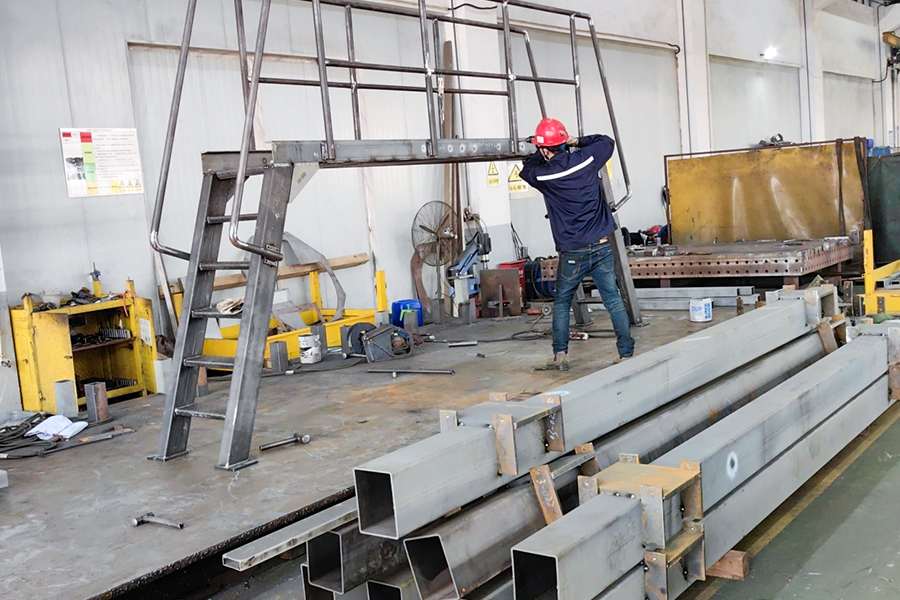
Modern structural designs increasingly use high-strength low-alloy (HSLA) steels, duplex stainless steels, or aluminum alloys. Each material requires distinct welding parameters, filler metals, and shielding gas mixtures. Moreover, joining dissimilar metals (e.g., stainless steel to carbon steel) demands buttering layers or specialized transition joints. Professional metal structural parts welding processing shops maintain inventories of certified filler metals and gas blends tailored to such applications. They also have welders trained for each material class—a resource rarely found in general fabrication shops.
Two of the most dangerous defects in structural welding are lack of fusion and cold cracking. Lack of fusion occurs when the weld metal does not fully bond with the base metal or previous passes, creating a stress riser. Cold cracking (hydrogen-induced cracking) typically appears hours or days after welding, especially in thick sections or restrained joints.
Professional processes eliminate these risks through:
Non-professional welders may skip preheating or use damp electrodes, setting the stage for invisible but lethal defects.
After completing metal structural parts welding processing, professional shops apply necessary post-weld treatments: stress relieving, grinding of toe radii to reduce stress concentration, and peening for fatigue resistance. They also coordinate with coating specialists to ensure weld seams receive adequate primer and topcoat thickness, preventing corrosion initiation at weld boundaries. This integrated approach ensures the component leaves the shop in a truly ready-to-install condition.
Structural designs often include skewed T-joints, tubular connections, or overhead welds in confined spaces. Professional welders are qualified for all positions (flat, horizontal, vertical, overhead) and use specialized equipment such as oscillating heads, welding tractors, or even automated robots for repetitive joints. Their experience includes managing accessibility issues, reflection in stainless steel welding, and magnetic arc blow in thick sections.
Beyond the weld itself, professional processing providers offer engineering support: selecting the most economical weld size, recommending alternative joint designs that reduce welding volume, or advising on sequence planning to minimize handling costs. This collaborative approach adds value that transactional welding services cannot match.
Choosing professional metal structural parts welding processing for critical components is not a luxury—it is a risk management necessity. From distortion control to defect prevention, from material adaptability to full traceability, the professional approach ensures that welded joints perform as intended for decades. Non-professional alternatives may appear cheaper on an initial quote, but they introduce rework, safety hazards, and hidden lifecycle costs that far outweigh any perceived savings.
Engineers, procurement specialists, and project owners should therefore prioritize welding processors who demonstrate certified procedures, qualified personnel, in-house NDT, and a culture of quality. In structural metalwork, every weld carries the load. Make certain that each one is professionally processed.
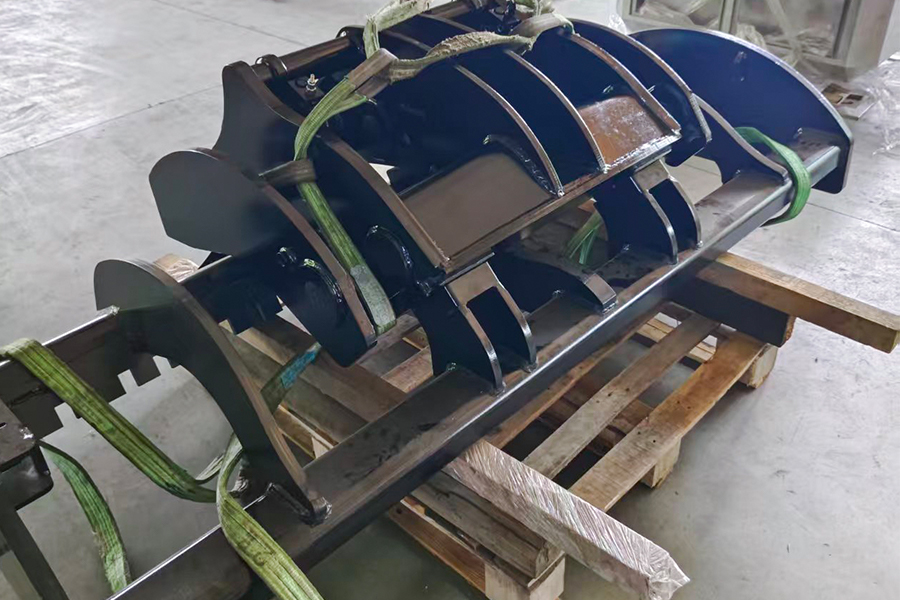
Why Steel Structure Frame Welding Fails: A Practical Diagnosis Guide Steel structure...
READ MORE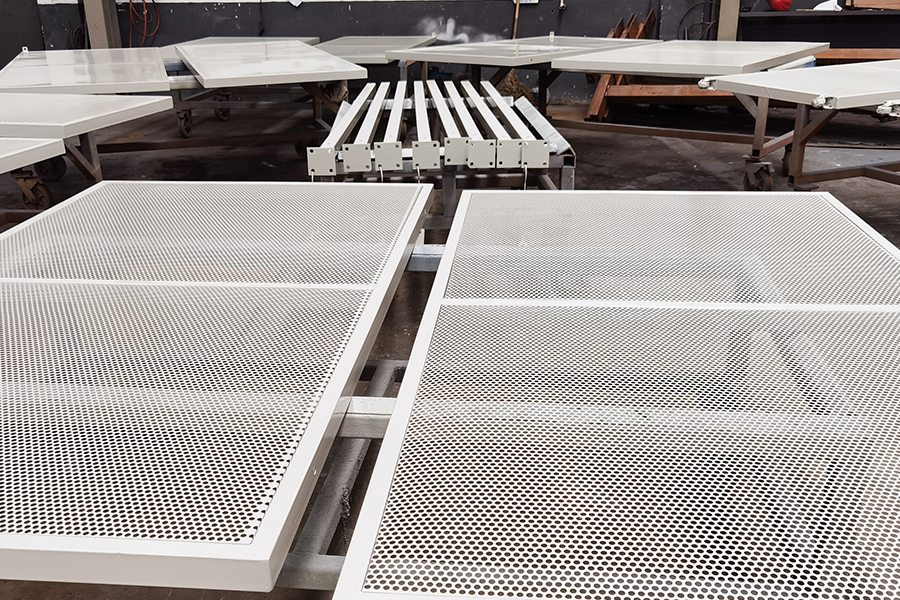
Storage racks carry heavy loads day after day, often for decades. The welds that ho...
READ MORE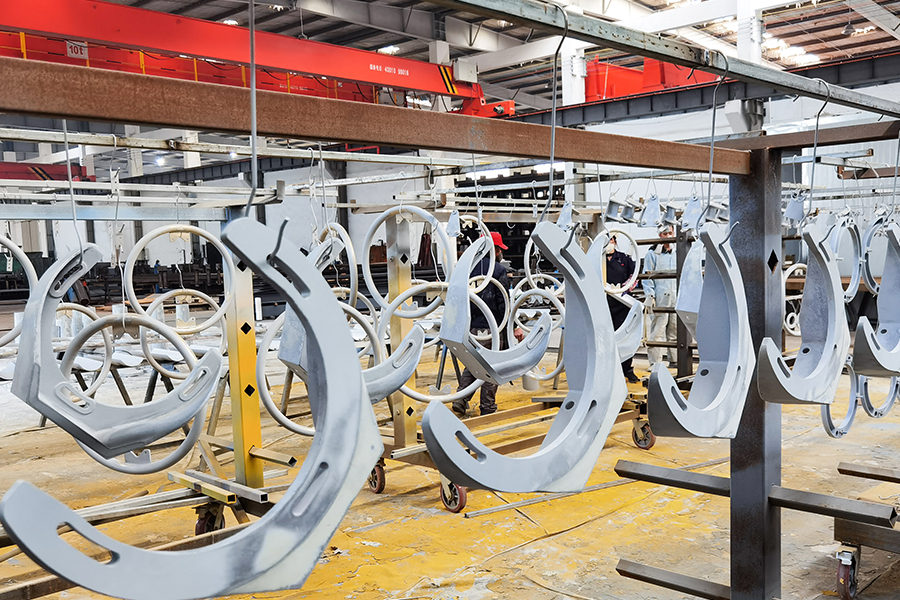
Understanding Heavy-Duty Steel Structure Welding Large-scale construction and indust...
READ MORE
Why Equipment Structural Framework Welding Demands More Than Just a Welder Not all w...
READ MORE
No.158, Baoqun Road, Yaozhuang Town, Jiashan County, Jiaxing City, Zhejiang Province , China
0086 13857303563
+86-573-84893330 / +86-573-84518277
product