English
 日本語
日本語
 Deutsch
 Español
No.158, Baoqun Road, Yaozhuang Town, Jiashan County, Jiaxing City, Zhejiang Province , China
News
Home / News / Industry News / What Are the Key Parts of Glass Manufacturing Equipment and Their Roles?

Content
Glass manufacturing is a complex process that involves various stages, including melting, forming, annealing, and coating. To ensure the production of high-quality glass products, the glass manufacturing equipment must be designed with precision and reliability. The equipment must also withstand high temperatures and pressures while maintaining operational efficiency.
Glass production machinery is made up of various structural parts that are crucial to the operation of the glass manufacturing process. These parts ensure that each stage of production is carried out efficiently and that the final product meets the required specifications. The following are the key components of glass manufacturing equipment:
The melting furnace is where raw materials such as silica sand, soda ash, and limestone are heated to high temperatures, causing them to melt into a molten glass. The furnace is a key component in the glass production process and plays a significant role in determining the quality of the final product.
Role in Glass Manufacturing:
Melting Furnace Specifications
| Feature | Description |
|---|---|
| Temperature Range | 1,500°C to 1,600°C |
| Material | High-grade refractory steel |
| Function | Melting raw materials into molten glass |
| Operating Pressure | Atmospheric pressure |
| Key Structural Components | Furnace shell, burner system, refractory lining |
Once the raw materials are melted into molten glass, the next step is to form the glass into the desired shape. This process can involve various forming methods such as blowing, pressing, and molding. The forming equipment is crucial in ensuring that the glass maintains the right shape and thickness.
Role in Glass Manufacturing:
Forming Equipment Specifications
| Feature | Description |
|---|---|
| Method | Blowing, Pressing, Molding |
| Material | Stainless steel |
| Precision | High-precision control for shape consistency |
| Key Structural Components | Molds, conveyors, shaping dies |
The annealing lehr is an important part of the glass manufacturing equipment that cools down the glass at a controlled rate. This helps reduce internal stresses in the glass and ensures that the product does not crack or break during further processing or handling.
Role in Glass Manufacturing:
Annealing Lehr Specifications
| Feature | Description |
|---|---|
| Temperature Control | Gradual cooling from 600°C to ambient temperature |
| Material | High-strength steel for insulation |
| Key Structural Components | Conveyor belts, heating elements, insulation panels |
Coating equipment is used to apply various coatings to the glass surface to enhance its properties, such as making it more reflective, scratch-resistant, or UV-protective. Coatings are essential for producing specialized glass used in industries such as construction, automotive, and electronics.
Role in Glass Manufacturing:
Coating Equipment Specifications
| Feature | Description |
|---|---|
| Coating Type | Low-E coating, UV coating, Anti-reflective coating |
| Application Method | Roll-to-roll, spray coating |
| Material | Stainless steel, specialized coating materials |
| Key Structural Components | Coating rollers, spray nozzles, heating lamps |
Cutting and inspection machines are essential for ensuring that the glass products meet the required size and quality standards. These machines cut the glass into specific dimensions and perform visual or automated inspections to check for defects.
Role in Glass Manufacturing:
Cutting and Inspection Machine Specifications
| Feature | Description |
|---|---|
| Cutting Method | CNC cutting, waterjet cutting |
| Inspection Type | Automated visual inspection, laser measurement |
| Material | Hardened steel components |
| Key Structural Components | Cutting blades, laser scanners, conveyors |
The glass production machinery structure is designed to ensure the stability, reliability, and efficiency of the entire production process. The structure of the machinery must be robust enough to handle the high temperatures, pressures, and physical stresses associated with glass manufacturing.
Key Factors in Machinery Structure Design:
Jiaxing Dingshi Machinery Manufacturing Co., Ltd. is a leading China-based manufacturer specializing in industrial and manufacturing equipment structures, including key structural components for glass production lines. With certifications such as EN1090, ISO3834, ISO9001, ISO14001, and ISO45001, Dingshi Machinery ensures high standards of quality in the equipment it provides for glass production lines.
Key Contributions:
1. What is the role of the melting furnace in glass production?
The melting furnace is responsible for heating raw materials to the required temperature to produce molten glass. It is crucial for ensuring uniformity and quality in the molten glass.
2. How does the forming equipment shape molten glass?
The forming equipment shapes molten glass into the desired product form through various techniques such as blowing, pressing, and molding, ensuring precision and uniformity in the glass product.
3. Why is the annealing lehr important in the glass production process?
The annealing lehr gradually cools the glass to reduce internal stresses and prevent cracking. It ensures that the glass is evenly cooled to maintain quality.
4. What types of coatings are applied to glass in the production process?
Common coatings include Low-E coatings, UV coatings, and anti-reflective coatings, which enhance the durability, functionality, and aesthetics of the glass.
5. What is the significance of precision in glass production machinery?
Precision ensures that the machinery operates within strict tolerances, producing high-quality glass products that meet industry standards and customer specifications.
Why Steel Structure Frame Welding Fails: A Practical Diagnosis Guide Steel structure...
READ MORE
Storage racks carry heavy loads day after day, often for decades. The welds that ho...
READ MORE
Understanding Heavy-Duty Steel Structure Welding Large-scale construction and indust...
READ MORE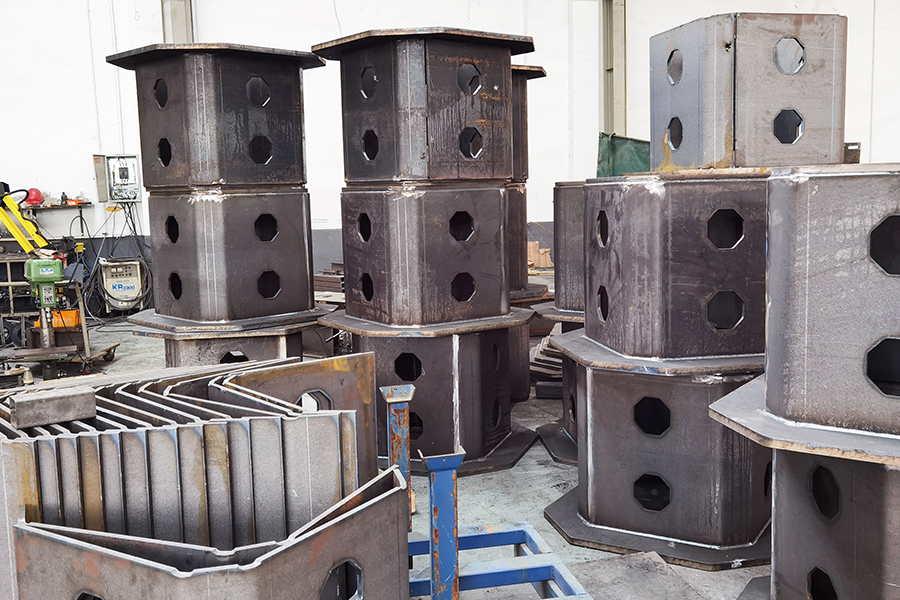
Why Equipment Structural Framework Welding Demands More Than Just a Welder Not all w...
READ MORE
No.158, Baoqun Road, Yaozhuang Town, Jiashan County, Jiaxing City, Zhejiang Province , China
0086 13857303563
+86-573-84893330 / +86-573-84518277
product